

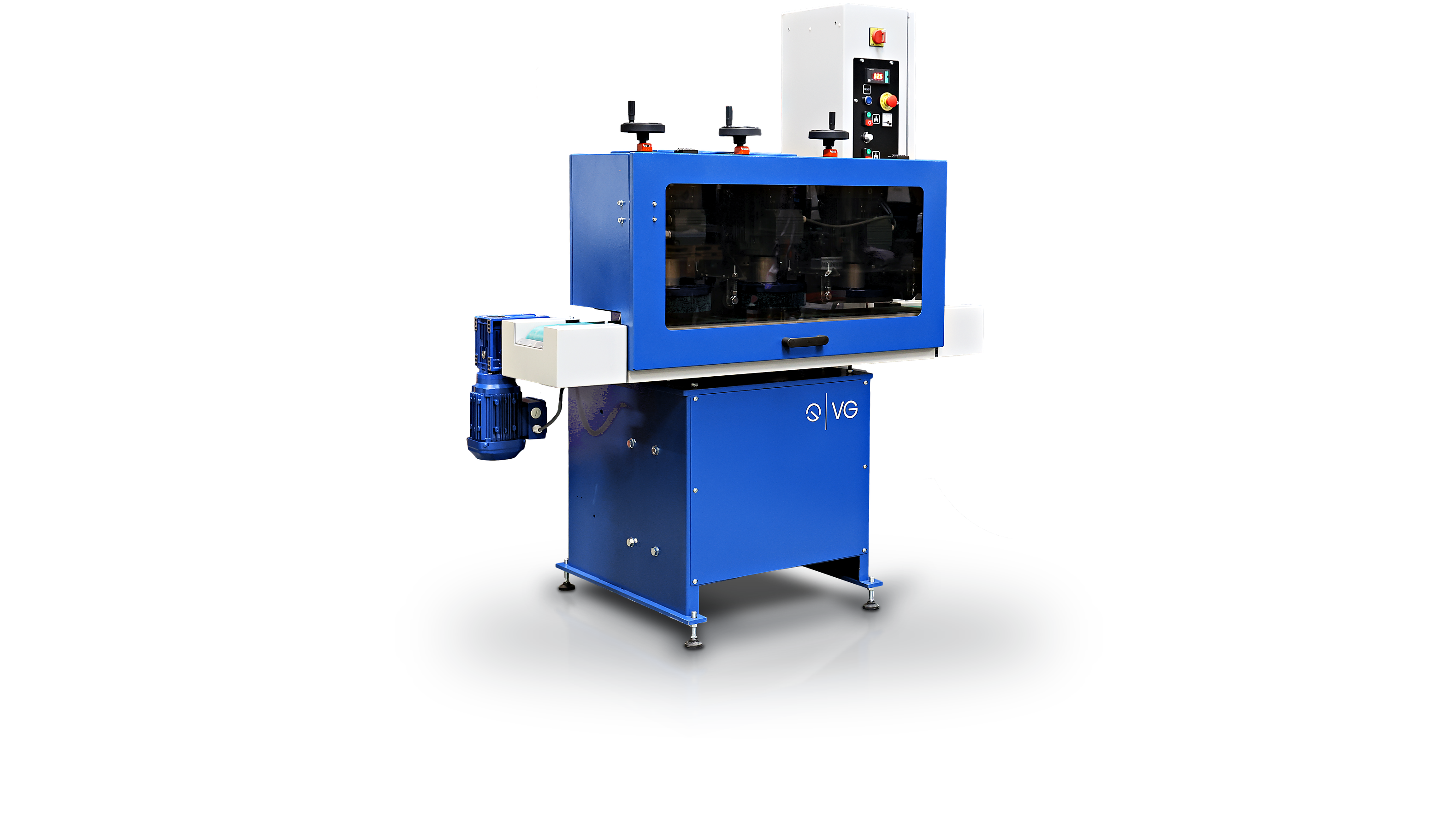
B.O.S.S. Deburring machine for small sheet metal parts
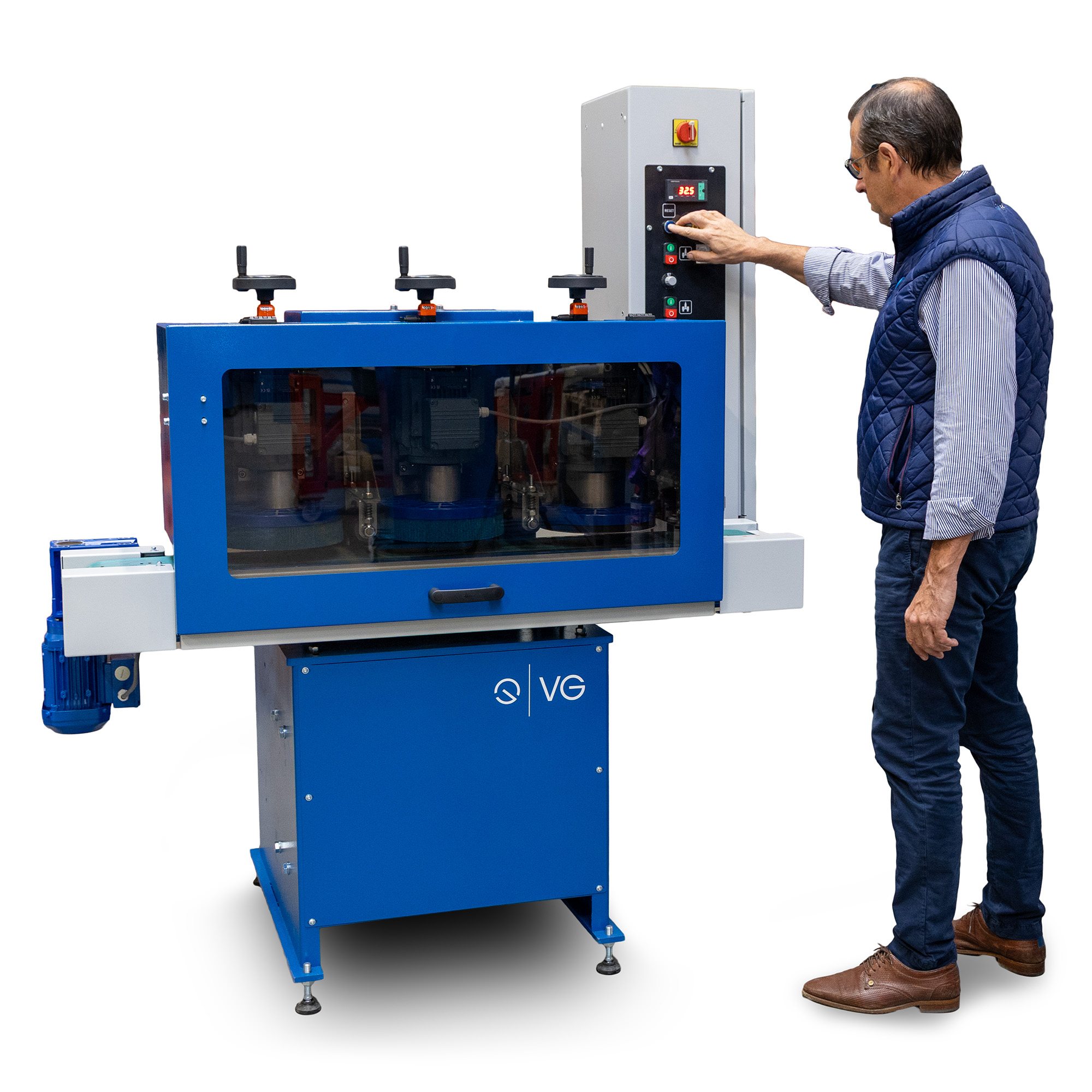
Built for small laser-cut sheet metal parts up to 150 mm wide that are hard to handle on larger machines. A grinding disc and two top brushes deburr and round the edges in a single pass.
- 150 mmworking width
- 0.5 – 100 mmworkpiece thickness
- 30 × 30 mmsmallest part
What can the B.O.S.S. do?
The B.O.S.S. makes short work of your smallest and most awkward sheet metal parts. Even light, irregularly shaped parts with holes and inner contours stay in place and come out with rounded edges.
Deburring
Removes vertical burrs along the cut contours of small sheet metal parts.
With the grinding disc
More about deburringEdge rounding
Breaks sharp edges and rounds outer edges and inner contours.
With the top brushes, in the same pass
More about edge roundingLaser oxide removal
Removes the oxide layer from oxygen-cut edges.
With oxide brushes (separate brush set)
More about laser oxide removal
Inside the B.O.S.S.
Deburring and edge rounding in a single pass
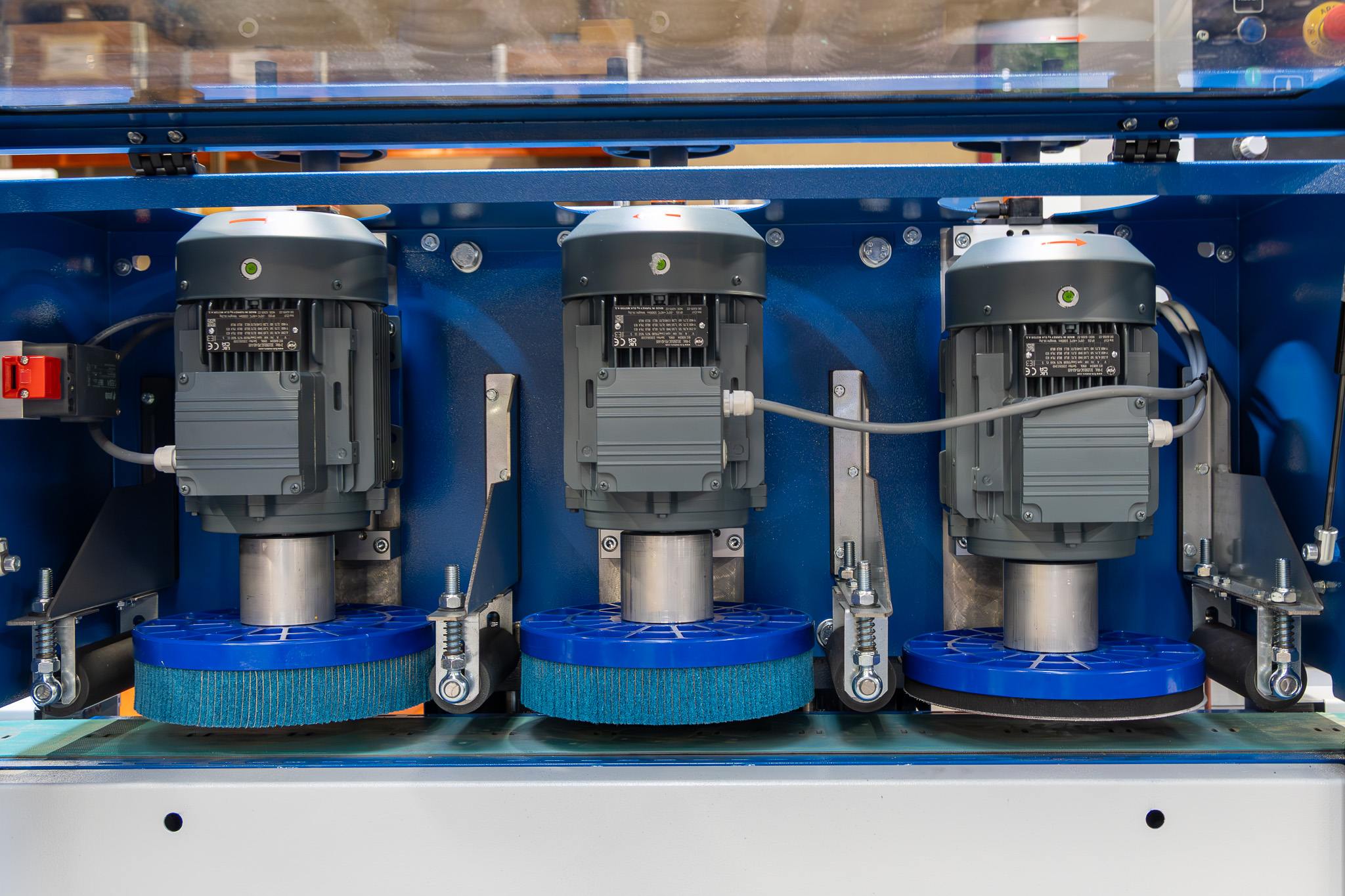
The three tools are in a fixed position, and the parts always pass beneath the centre of each tool. Together with the vacuum or magnetic table, this limits the risk of parts shifting or twisting. As a result, the machine can apply more pressure, even on very small and light parts.
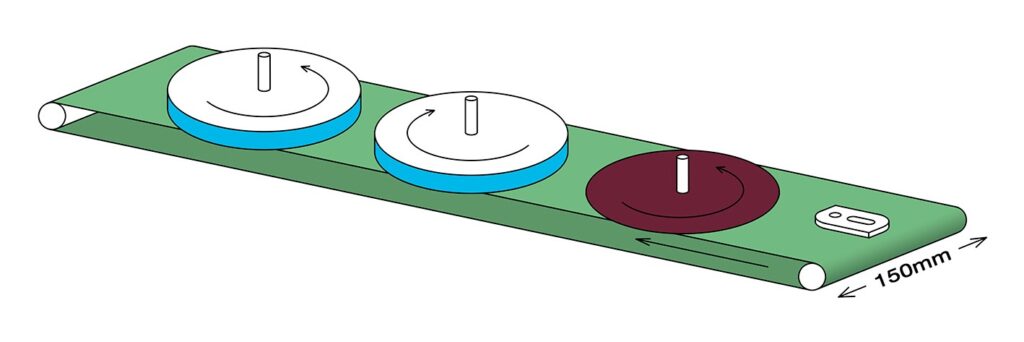
Infeed
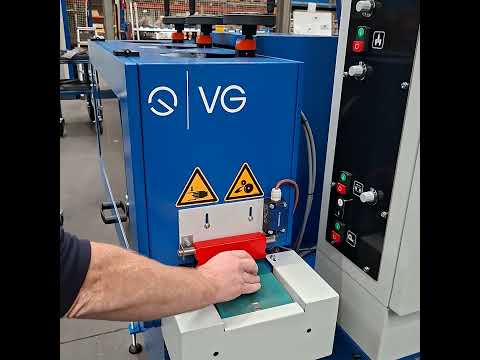
A vacuum or magnetic table under the belt and spring-loaded pressure rollers hold the part in place, even on 0.5 mm sheet.
Deburring
A lead-in zone guides the part under the centre of the grinding disc, which removes the vertical burr.
Edge rounding
Two counter-rotating top brushes produce an even edge radius on inner and outer contours.
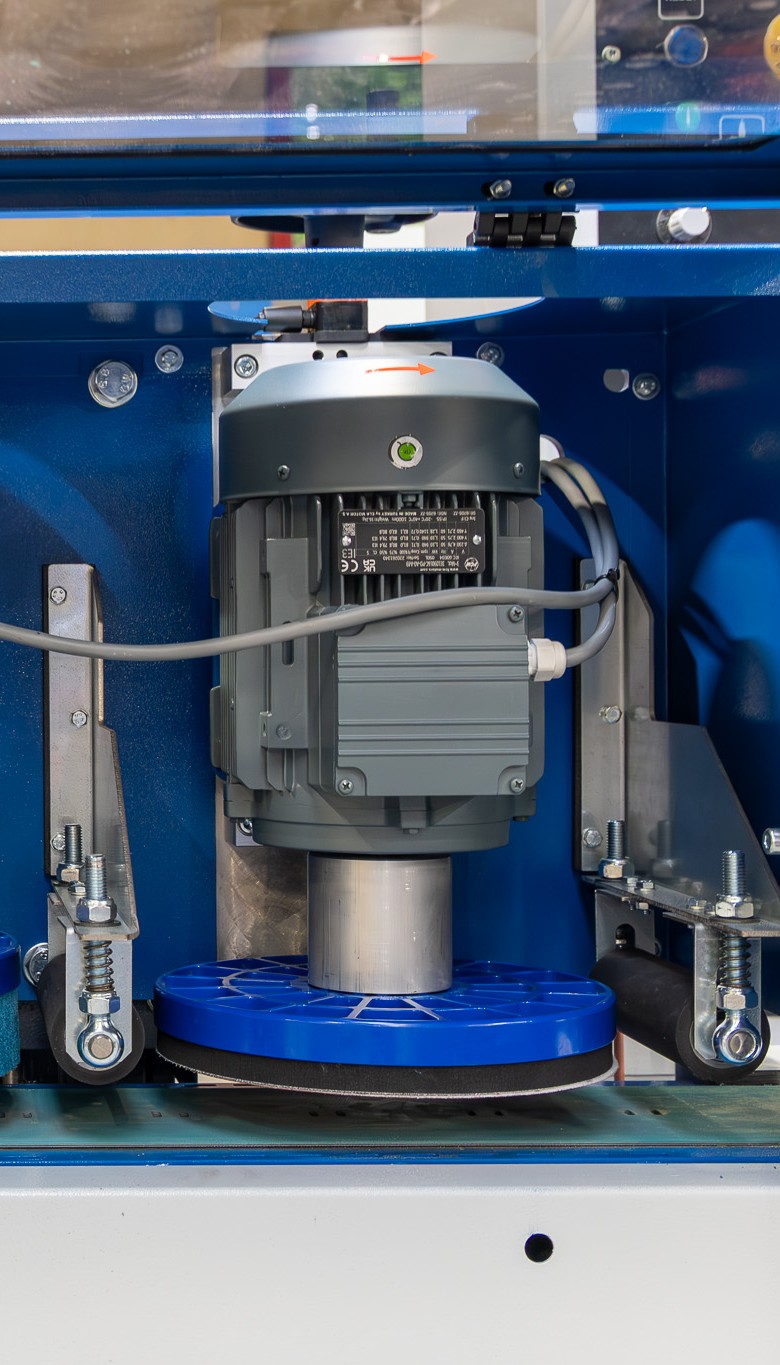
Unit 1
Grinding disc
A Ø 250 mm grinding disc removes the vertical burrs and prepares the edges for the top brushes that follow.
- Tooling: grinding pads on a disc holder with a lead-in zone that guides the parts under the grinding disc
- Control: switched on separately; adjustable speed
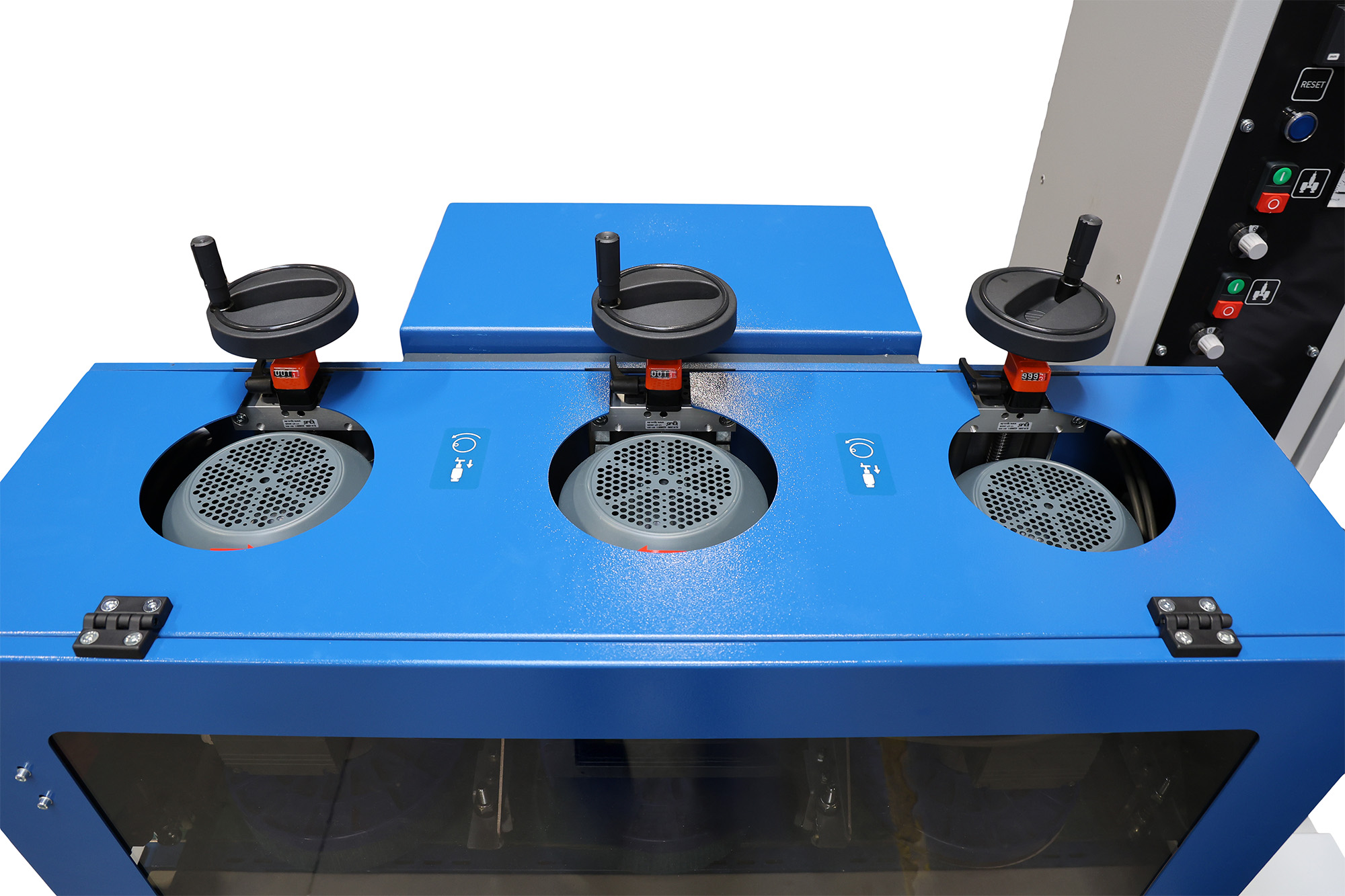
- Adjustment: height and pressure with the handwheel, without opening the cover
- Tool change: quick; optional quick lock system
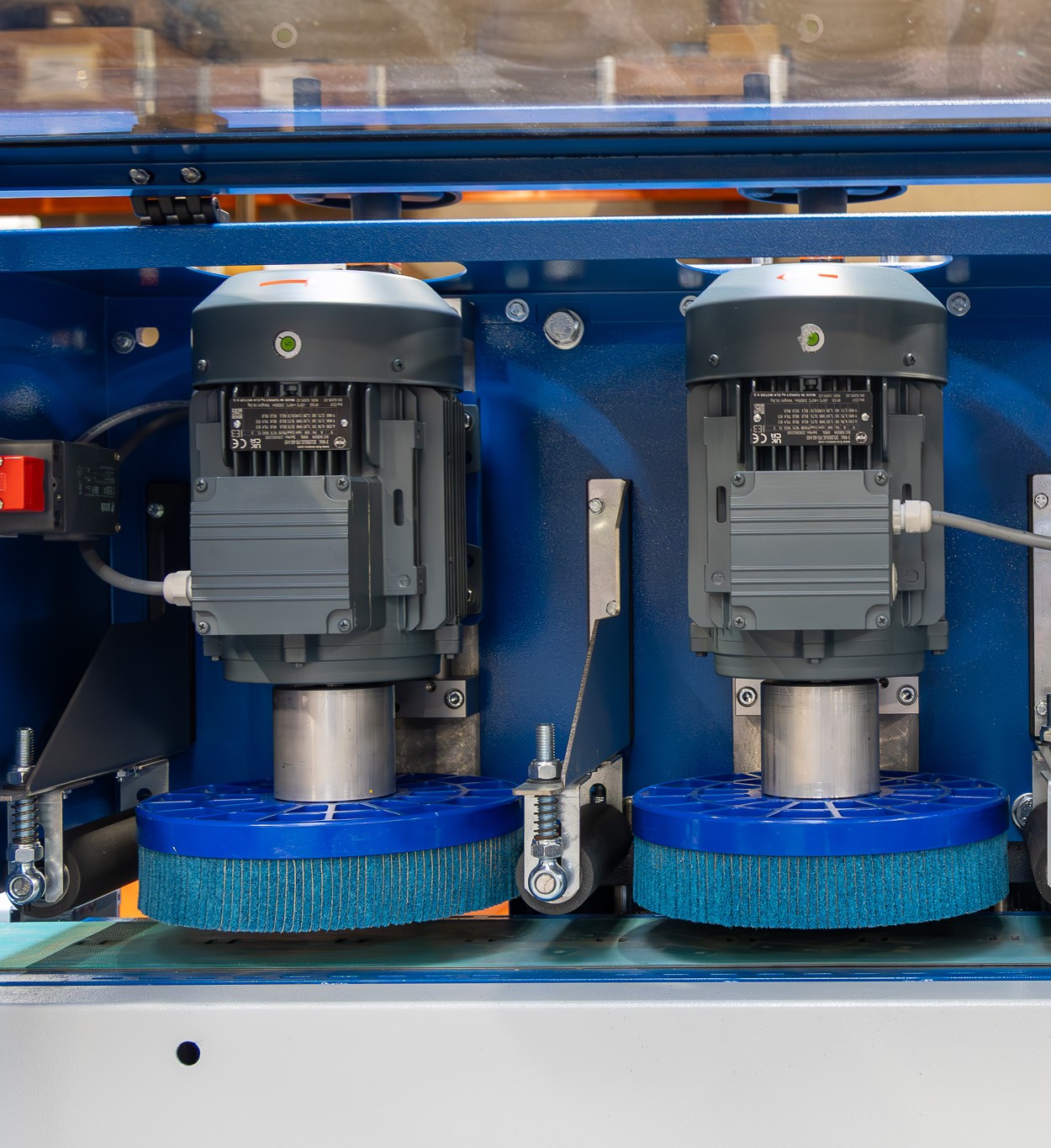
Unit 2
Top brush system
Two Ø 250 mm brushes rotate in opposite directions and reach the edge from several angles. Outer edges and inner contours are rounded evenly.
- Tooling: sets of lamella brushes available for steel, stainless steel or aluminium
- Control: switched on separately; speed adjustable to suit the material
- Adjustment: height, pressure and wear compensation with one handwheel per brush, without opening the cover
- Tool change: quick; optional quick lock system
Controls and conveyor
Holding small parts and setting up the machine
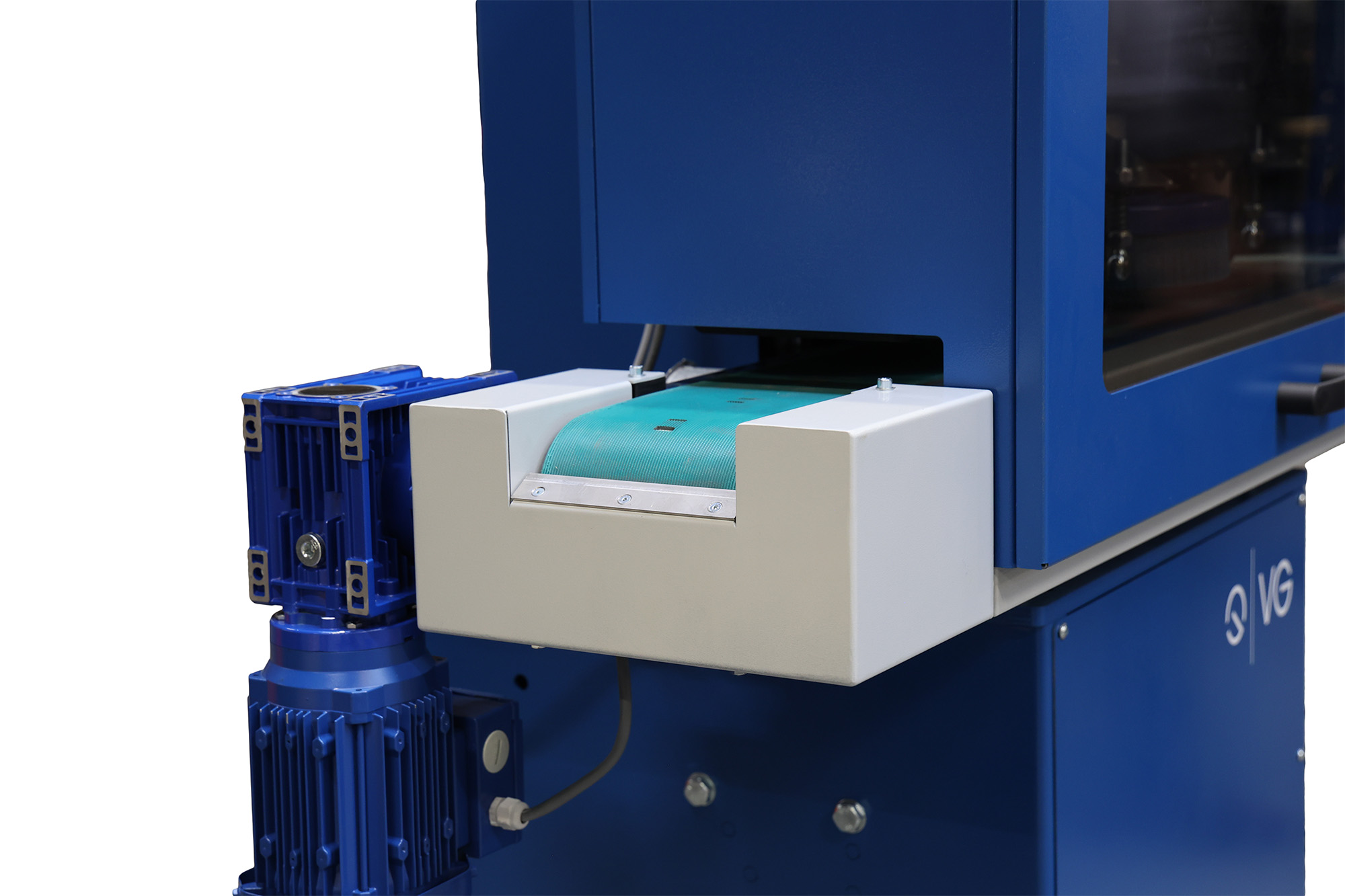
A part that moves is not deburred properly. A belt with good grip, a vacuum or magnetic table and spring-loaded pressure rollers keep it in place.

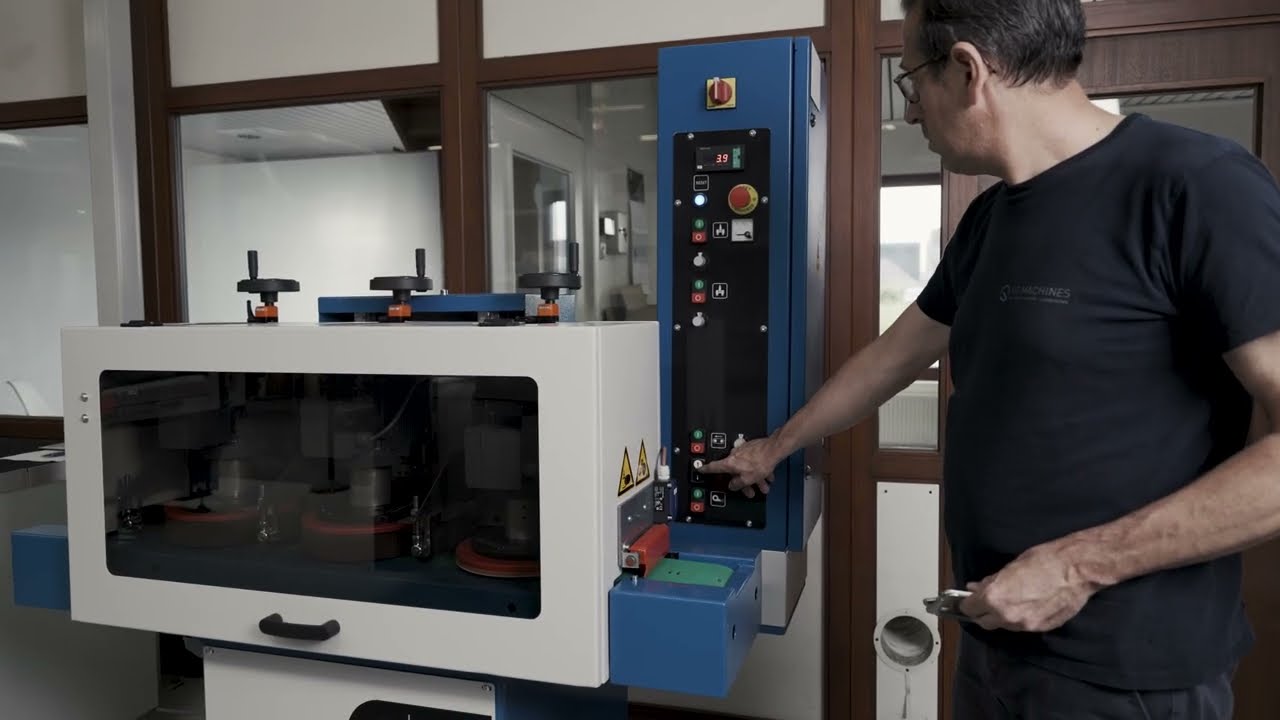
Controls
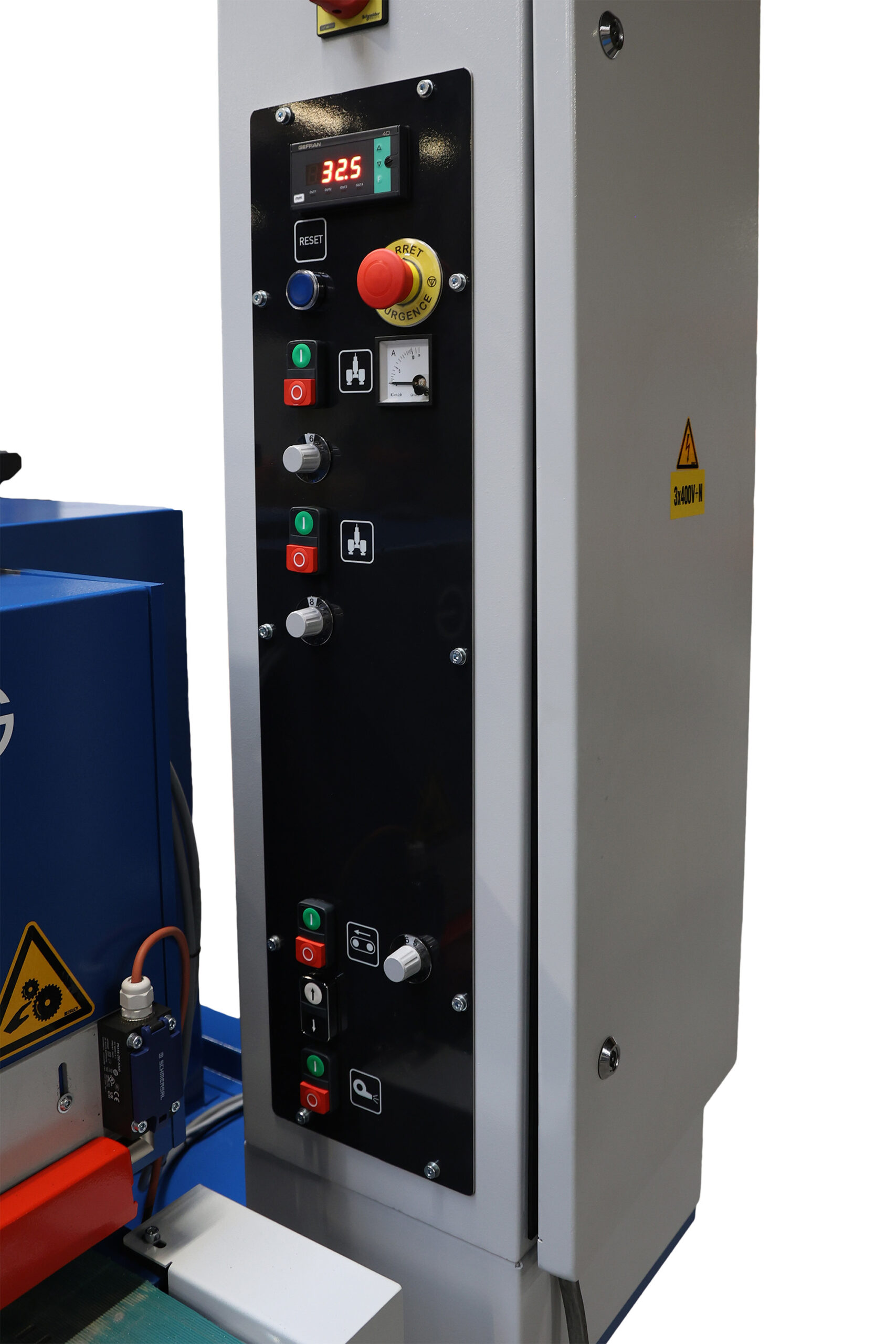
You set the workpiece thickness with the motorised height adjustment and read it on a digital display. The entire top section, including the grinding disc, brushes and pressure rollers, moves up and down. You set the height and pressure of the grinding disc and of each brush with a handwheel, without opening the cover. On the brushes, you also use it to compensate for wear.
Vacuum or magnetic table
The vacuum version holds the parts down with a 2.2 kW vacuum motor, through a central row of holes in the conveyor belt. The magnetic version has a 150 × 990 mm magnetic table under the belt, from the first to the last pressure roller.
Two versions
Vacuum table or magnetic table
The B.O.S.S. comes in two versions: with a vacuum table or with a magnetic table. The choice depends on your material and the size of your smallest part.
| Feature | Vacuum table | Magnetic table |
|---|---|---|
| Materials | Ferrous and non-ferrous metals | Magnetic material, such as steel |
| Minimum part size | 40 × 40 mm | 30 × 30 mm |
| Points to note | The part must cover enough suction holes. Parts with many cut-outs get less suction | Not suitable for aluminium or most stainless steels |
Technical specifications
The key figures at a glance. The technical datasheet gives all the details.
Technical data subject to change.
- Processing
- Top side, dry
- Working width
- 150 mm
- Workpiece thickness
- 0.5 – 100 mm
- Feed speed
- 0.8 – 6 m/min
- Versions
- Vacuum table or magnetic table
- Dimensions (L × W × H)
- 1,560 × 937 × 1,920 mm
In-house development, production and service
VG Machines has been designing and building machines in Belgium since 1950.
- Tests on your own parts in our expertise centre
- Installation, start-up and operator training on the machine
- Personal support and service after installation
Frequently asked questions about the B.O.S.S.
I already have a deburring machine. Why add a B.O.S.S.?
Larger machines are not always suited to small workpieces: small, light or irregularly shaped parts are hard to hold down on the conveyor belt.
Especially on rotor systems, small parts can shift, twist or even be thrown off the belt. If you lower the brush pressure, the edges are not rounded enough. If you raise it, the parts can start to shift.
The B.O.S.S. is designed for small, light sheet metal parts that are hard to hold down. Next to your existing deburring machine, it keeps that machine free for larger workpieces or a wider mix of jobs. That helps to keep the cost per part as low as possible.
What parts is the B.O.S.S. designed for?
For small laser-cut sheet metal parts up to 150 mm wide and from 0.5 to 100 mm thick. The smallest part is 40 × 40 mm with the vacuum table and 30 × 30 mm with the magnetic table. Whether a specific part is suitable also depends on its shape, whether it stays in place on the vacuum or magnetic table, and the operation you need. We assess this during a test.
How do I choose between the vacuum table and the magnetic table?
That depends on your material and your smallest part. The vacuum table holds ferrous and non-ferrous parts down to 40 × 40 mm. The magnetic table holds only magnetic material, such as steel, down to 30 × 30 mm. We recommend the right version based on your parts.
Does the B.O.S.S. process both sides of a part?
No, the B.O.S.S. processes the top side. If the bottom side also needs deburring and edge rounding, you turn the part over and feed it through a second time.
Can the B.O.S.S. remove laser oxide?
Yes, with a different brush set: oxide brushes instead of lamella brushes. The main purpose of the B.O.S.S. is deburring and edge rounding. You cannot round edges and remove oxide in the same pass.
What connections does the B.O.S.S. need?
A 3L + N + PE power supply and dust extraction of at least 1,000 m³/h at 22 m/s. The rated power is 5.93 kW (11.86 A) with the vacuum table and 3.73 kW (7.46 A) with the magnetic table. The machine has a footprint of 1,560 × 937 mm, is 1,920 mm high and weighs about 900 kg.
Does the B.O.S.S. fit into a production line?
Yes. The conveyor belt runs at a fixed pass height of 870 mm, whatever the workpiece thickness. You can connect roller conveyors or small return systems at the infeed or outfeed.
Can I have my own parts tested?
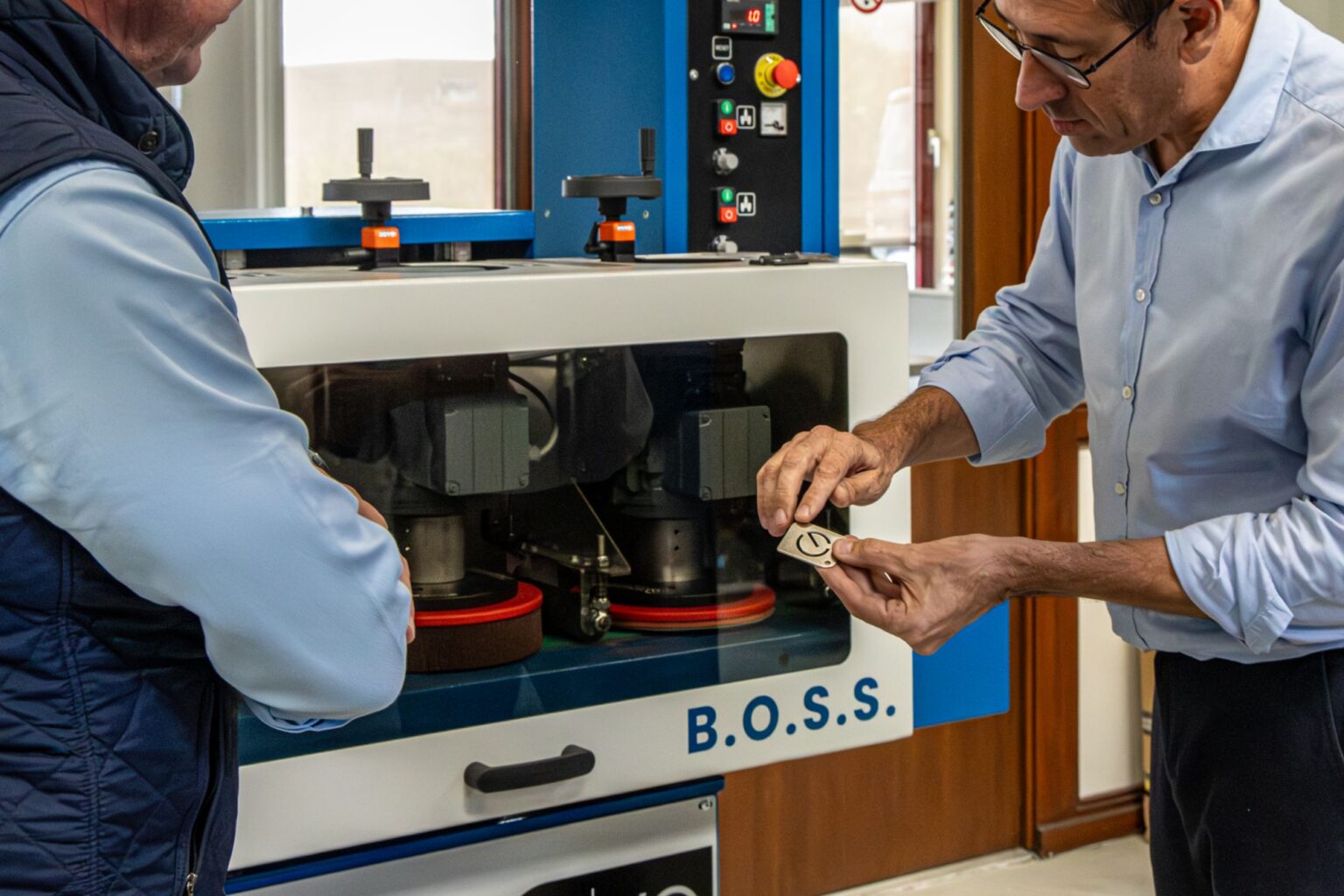
Yes. You can bring your parts to our showroom in Kuurne or send them to us. We test settings such as the feed speed, disc and brush pressure, edge rounding and the final finish. The test is free and without obligation.
How do installation and training work?
We install the machine, start it up and train your operators on it. The B.O.S.S. is less complex than our larger machines, so the training is shorter. After that, we continue to support you personally with the machine and your production.


Test the B.O.S.S. on your own parts
Visit our showroom in Kuurne or send us your parts. We assess the result and the edge rounding, and determine the right machine settings.
- Free and without obligation
- Tests on your own parts in Kuurne
- Advice from a deburring specialist
Thank you, we have received your request
A specialist will review your request and contact you personally.